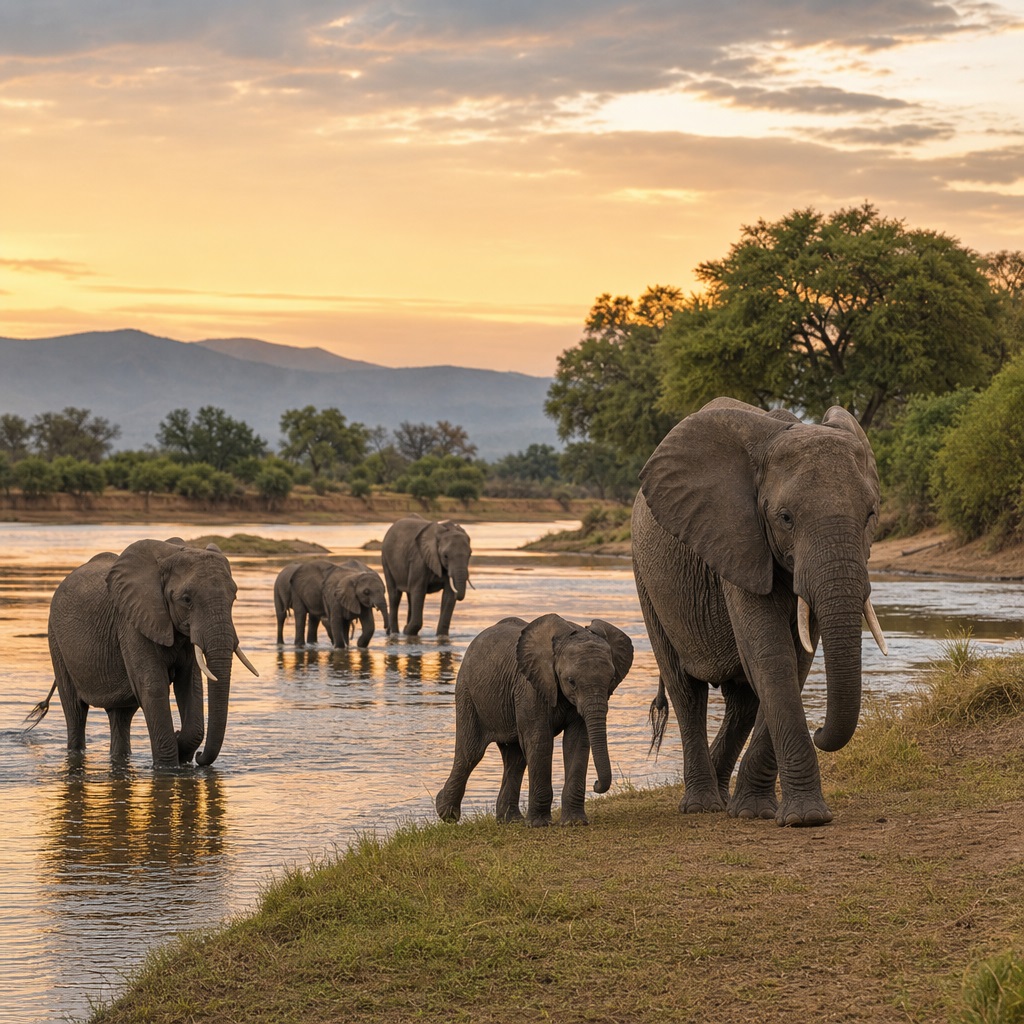
In Zambia's Lower Zambezi, elephants are once again moving freely through the landscape—a quiet victory years in the making. After sustained anti-poaching patrols, aerial surveillance, and protection efforts, the change is becoming visible. Recently, IFAW reported seeing small family groups calmly crossing the Zambezi during routine flights. It's a sign that elephants may be reclaiming ancient migration routes they once avoided.
Corridors matter more than borders
Elephants need space to move between water, food, shade, breeding grounds, and seasonal habitats. A single protected area helps, but it's rarely enough. When farms, fences, roads, or conflict block the paths between these places, elephants get squeezed into shrinking safe zones.
Less poaching, more trust
When the threat of poaching drops, animal behavior shifts. Elephants start using areas they once feared. Family groups move in more predictable patterns. This change is harder to measure than population numbers, but it matters deeply—because fear shapes how wildlife uses an entire landscape.
Communities are part of the corridor
Where elephants roam, they share space with people. That's why conservation must include conflict prevention, crop protection, local jobs, and trust-building in villages. A corridor isn't just a line on a map. It's a working relationship between wildlife and the people who live alongside them.
A test for conservation with room to move
The story from Lower Zambezi shows what elephant conservation increasingly needs: safe room to roam across large, connected areas. Protecting elephants isn't just about stopping killing. It's about making landscapes safe enough that families can move, feed, and find their old routes again.